Piston
A piston engine turns a propeller directly or through a reduction gearbox. This class is considered for initial training, private routes and missions where a straightforward layout and moderate operating costs matter.
Two aircraft classes
Piston and jet fixed-wing aircraft for training, private routes and special missions. The appropriate class is determined by flight profile, aerodrome, load and operating requirements.
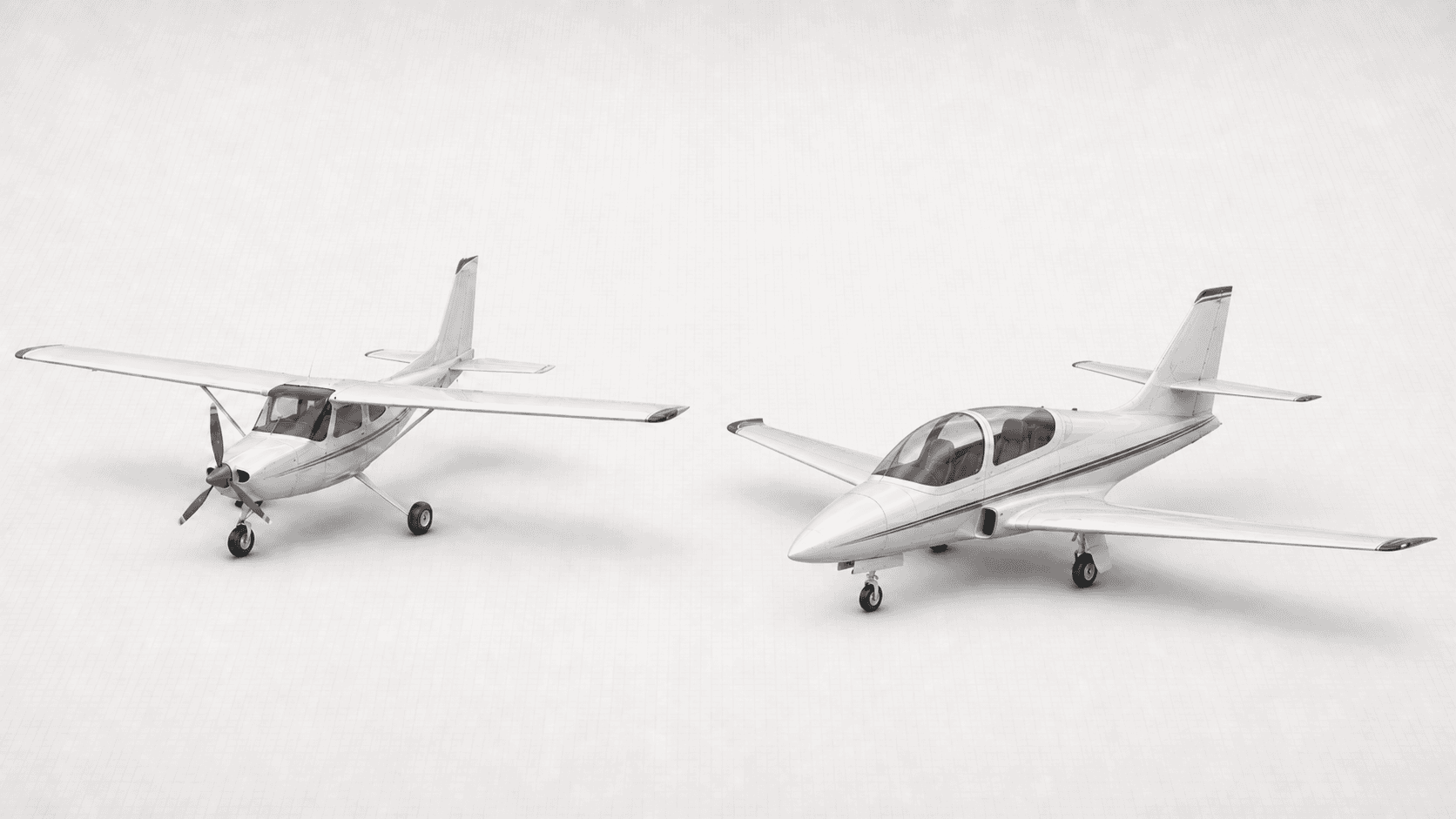
A piston engine turns a propeller directly or through a reduction gearbox. This class is considered for initial training, private routes and missions where a straightforward layout and moderate operating costs matter.
A jet engine creates thrust without a propeller. Trainers in this class are considered for preparation for faster aircraft, flight practice and specialized training programs.
01 / Class comparison
Generally more economical on short and medium routes at moderate speed. Easier to base and maintain, and many models can use smaller aerodromes.
Lower cruise speed and operating altitude. Long routes take more time, while vibration and power loss with altitude are usually more noticeable, particularly without turbocharging.
Higher speed and the ability to cover long distances faster. High-altitude flight expands the available route profile, while a turbine powerplant produces thrust with less vibration.
Fuel consumption and operating cost are usually higher, especially on short sectors. Trained crew, specialized maintenance and suitable aerodrome infrastructure are required.
02 / Applications
The mission is determined not only by aircraft size, but also by cabin, payload, equipment, route and available aerodrome network.
Two-seat aircraft are used for initial training and maintaining proficiency. Selection of a trainer considers visibility, controls, instrumentation, operating costs and training-program requirements.
A light aircraft can be used for personal and familiarization flights between suitable aerodromes. Configuration is assessed against the actual route, weather, number of people, baggage and required fuel reserve.
High-wing aircraft and specialized layouts are considered for visual observation, photography and video. Cockpit visibility, equipment placement, stable flight and approved payload are important.
Small aircraft can connect aerodromes within a region and perform business or service routes. Feasibility depends on infrastructure, aircraft equipment and applicable rules.
03 / Layout
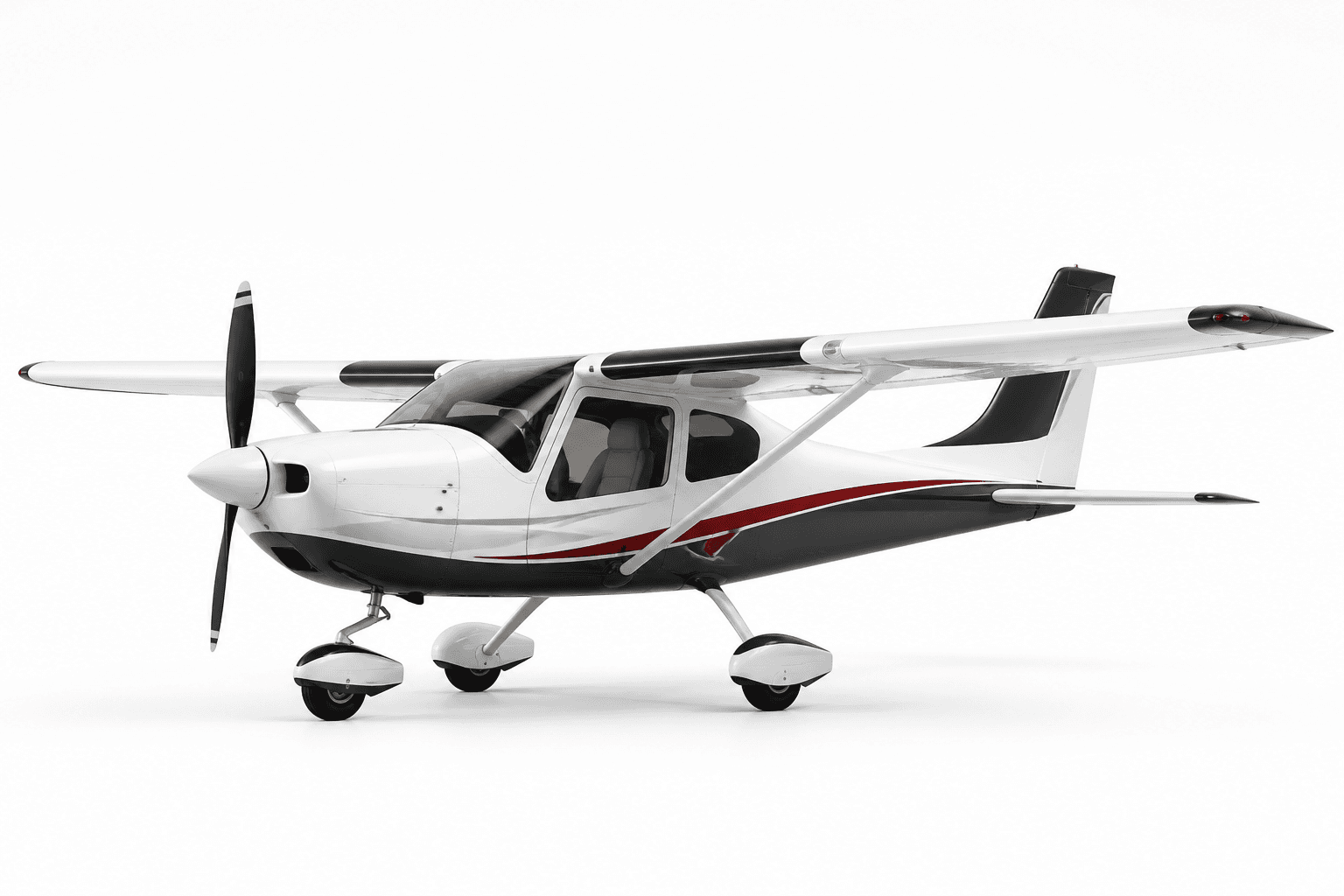
Wing position affects visibility, cabin entry and ground access. Landing-gear type and airframe geometry relate to runway requirements, while seat count and baggage compartments relate to actual route load.
The aircraft should be evaluated as a system: airframe, engine, propeller, fuel system, controls, instruments, communications and navigation must suit the intended basing conditions and crew training.
Touring layout
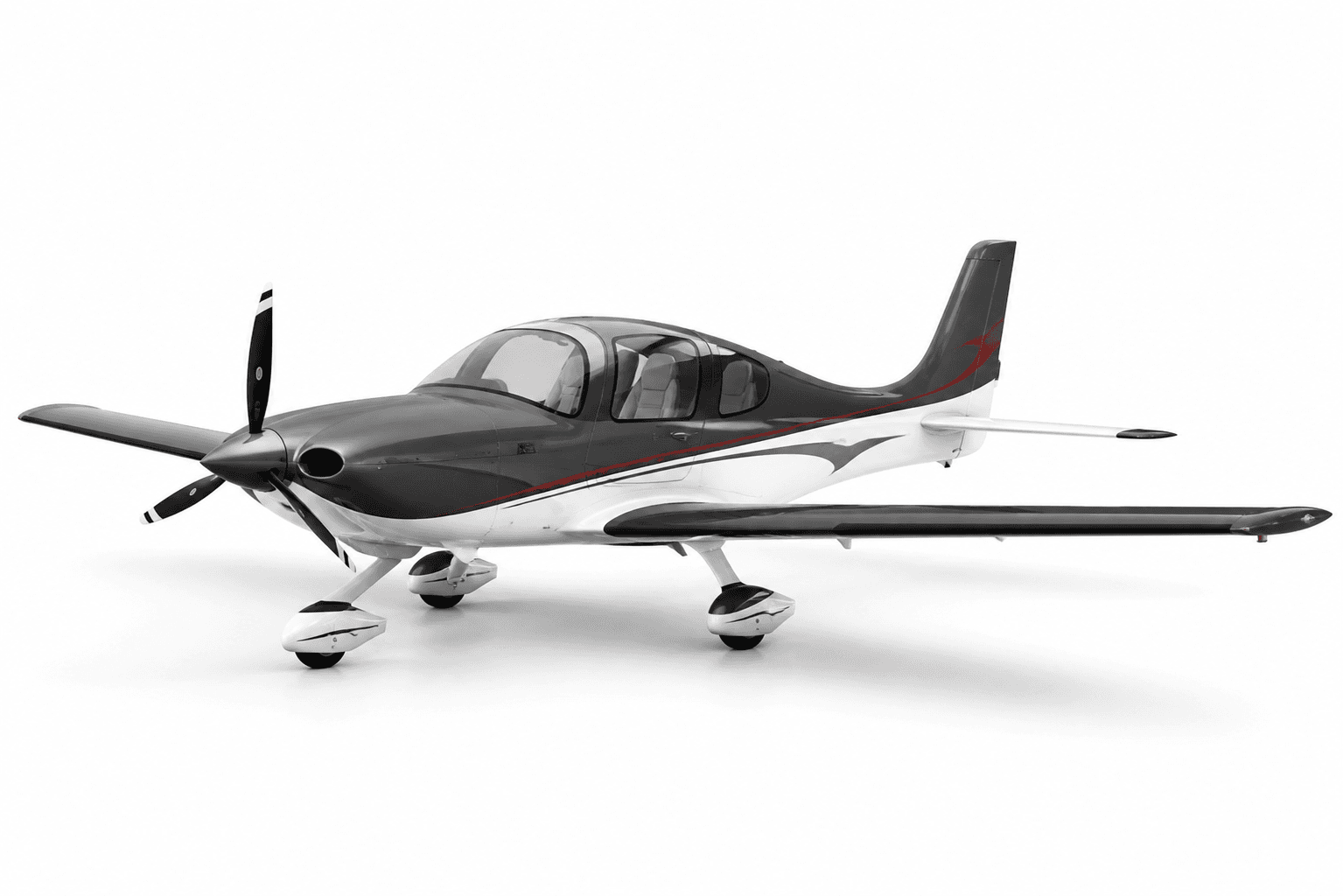
A four-seat layout does not mean the same usable load on every route. The permitted combination of passengers, baggage and fuel is checked against mass, balance, weather and runway performance for each flight.
Pilot workstation
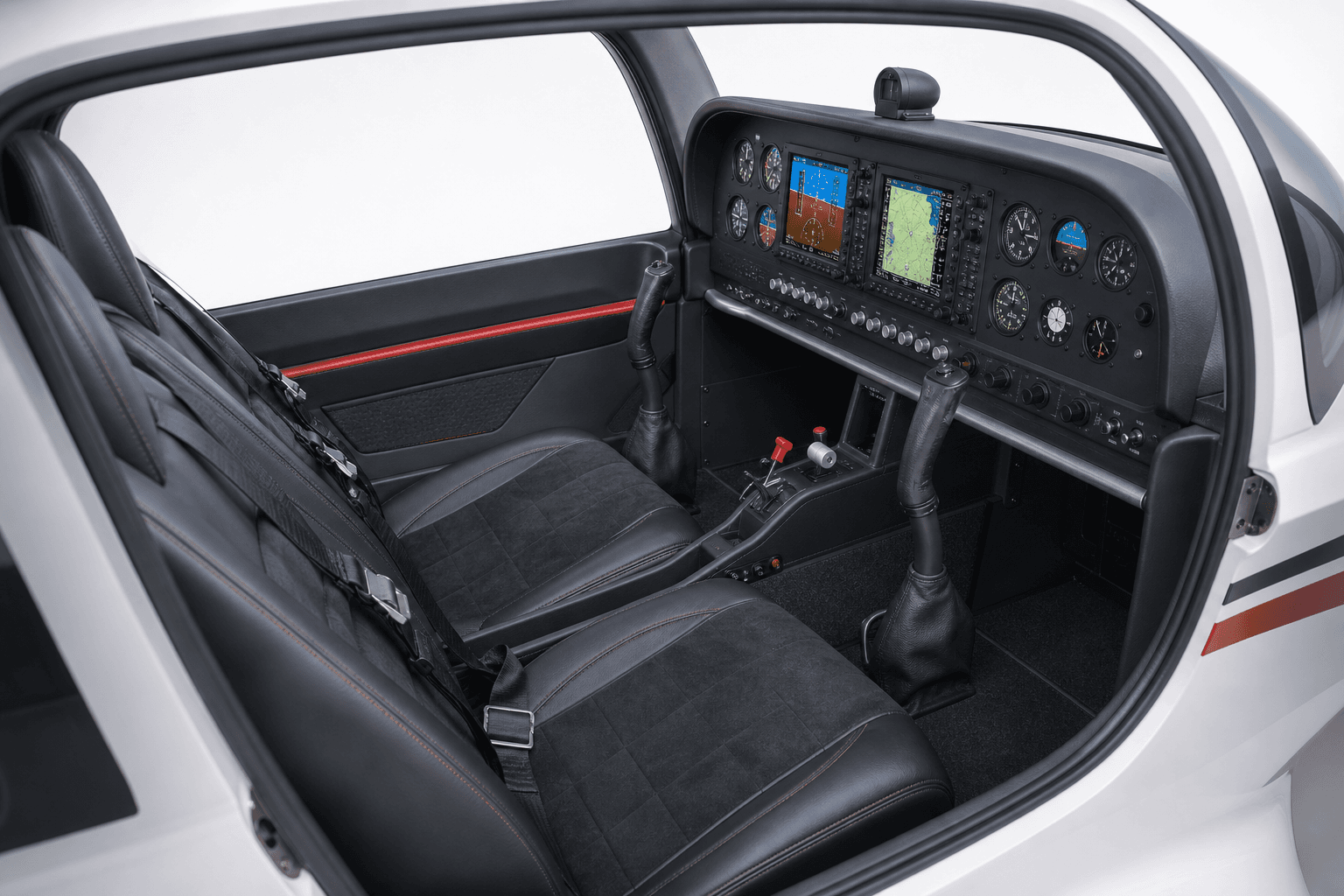
The panel may combine electronic displays and separate standby instruments. Aircraft comparisons consider readability, control placement, visibility, communications, navigation and suitability of the equipment for planned flights.
04 / Selection
First define flight type, number of people, baggage or equipment, seasonality and expected routes. These inputs shape cabin, payload and configuration requirements.
Runway length and surface, aerodrome elevation, obstacles, hangar storage, fuel and technical support directly affect the appropriate aircraft class.
Range is evaluated together with load, weather, altitude, wind, alternate aerodromes and mandatory reserves. An advertised figure without these conditions does not describe an actual flight.
Before purchase, verify pilot training, documentation, maintenance schedule, component availability, insurance and applicable operating requirements for the specific aircraft.
05 / Limitations
Even a compact aircraft requires a prepared site, trained crew and compliance with the limits in the specific aircraft documentation.
Wind, visibility, cloud, temperature and runway condition affect departure feasibility. Permitted conditions depend on crew training, equipment and documentation for the specific aircraft.
Passengers, baggage, equipment and fuel are considered together. Permitted mass and center of gravity are checked against the selected model's manual for every flight.
Safe operation depends on pilot qualifications, current documentation, the condition of the airframe, engine, propeller and controls, and compliance with scheduled maintenance.
Next step
We will define the purpose, seat count, basing conditions and constraints to prepare a focused commercial proposal.