01
Aerial imaging and film
A six-rotor platform can carry cameras, stabilizers and auxiliary equipment. Selection takes into account the total payload mass, balance and requirements for smooth movement.
Professional multirotor platforms
Six-rotor unmanned platforms are selected for missions requiring stable flight, payload equipment and precise vertical positioning.
01 / Design
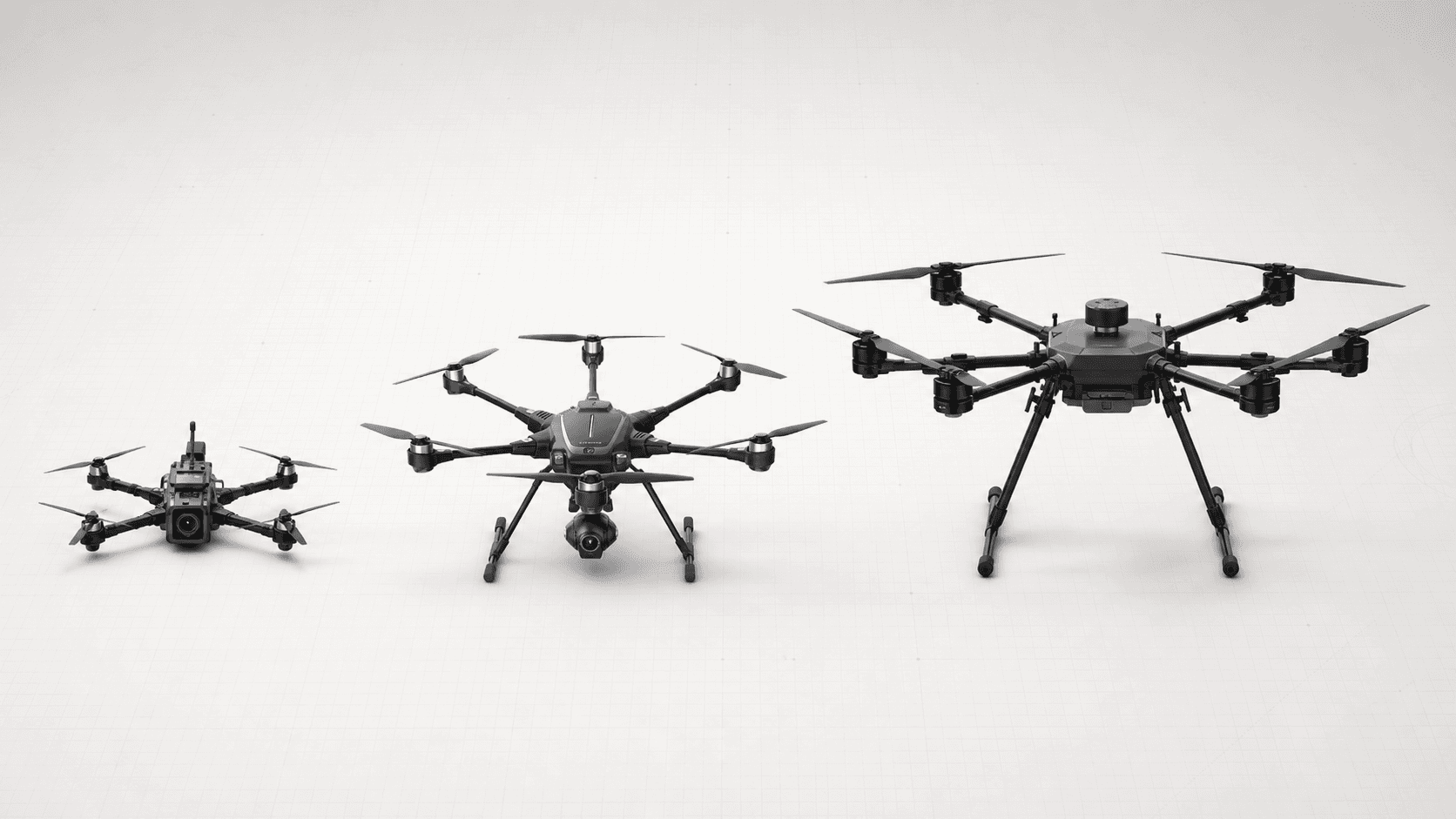
A hexacopter is an unmanned aircraft with six motors and propellers. In the most common layout, the motors sit in one plane around the body while the flight controller continuously coordinates their operation.
Compared with a four-rotor platform, this design provides more available thrust and distributes the load across more power units. Hexacopters are therefore often considered for heavy cameras, LiDAR and specialized sensors.
Actual capability is determined by the complete system: frame, motors, batteries, controller, communications, payload and software. Rotor count alone cannot replace engineering analysis of the configuration.
02 / Applications
This class is selected by mission, equipment package and required data quality, not by appearance.
A six-rotor platform can carry cameras, stabilizers and auxiliary equipment. Selection takes into account the total payload mass, balance and requirements for smooth movement.
A hexacopter can carry LiDAR units, multispectral cameras and surveying modules. Accurate positioning and predictable flight are especially important for data quality.
These platforms are used to inspect extensive and hard-to-reach assets. Cameras and sensors collect data without continuously placing specialists in hazardous areas.
Vertical takeoff and landing enable operation where no runway is available. The mission is calculated using the actual payload, route, site conditions and applicable restrictions.
Hexacopters are used for aerial imaging of fields, crop monitoring and work with specialized sensors. Configuration depends on area, payload, route and data requirements.
03 / Capabilities
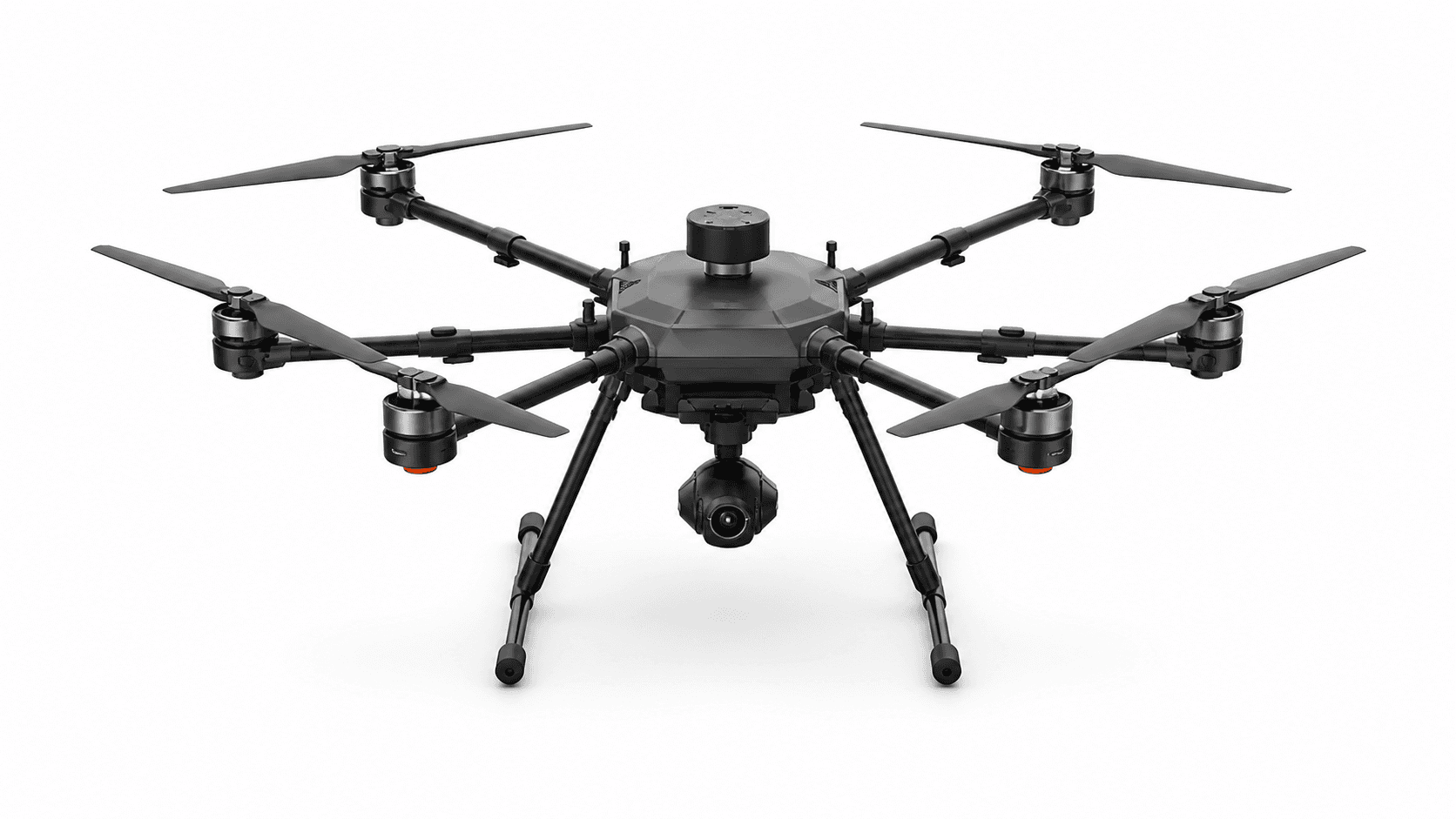
The same frame type can carry different equipment. Imaging requires stabilization and smooth movement, mapping requires positioning accuracy, and inspection requires the right sensor and a safe distance from the asset.
With a compatible controller and sufficient thrust reserve, a six-rotor layout may provide additional resilience in a partial failure. This behavior must be confirmed by the manufacturer and tests of the specific configuration.
Operational configuration
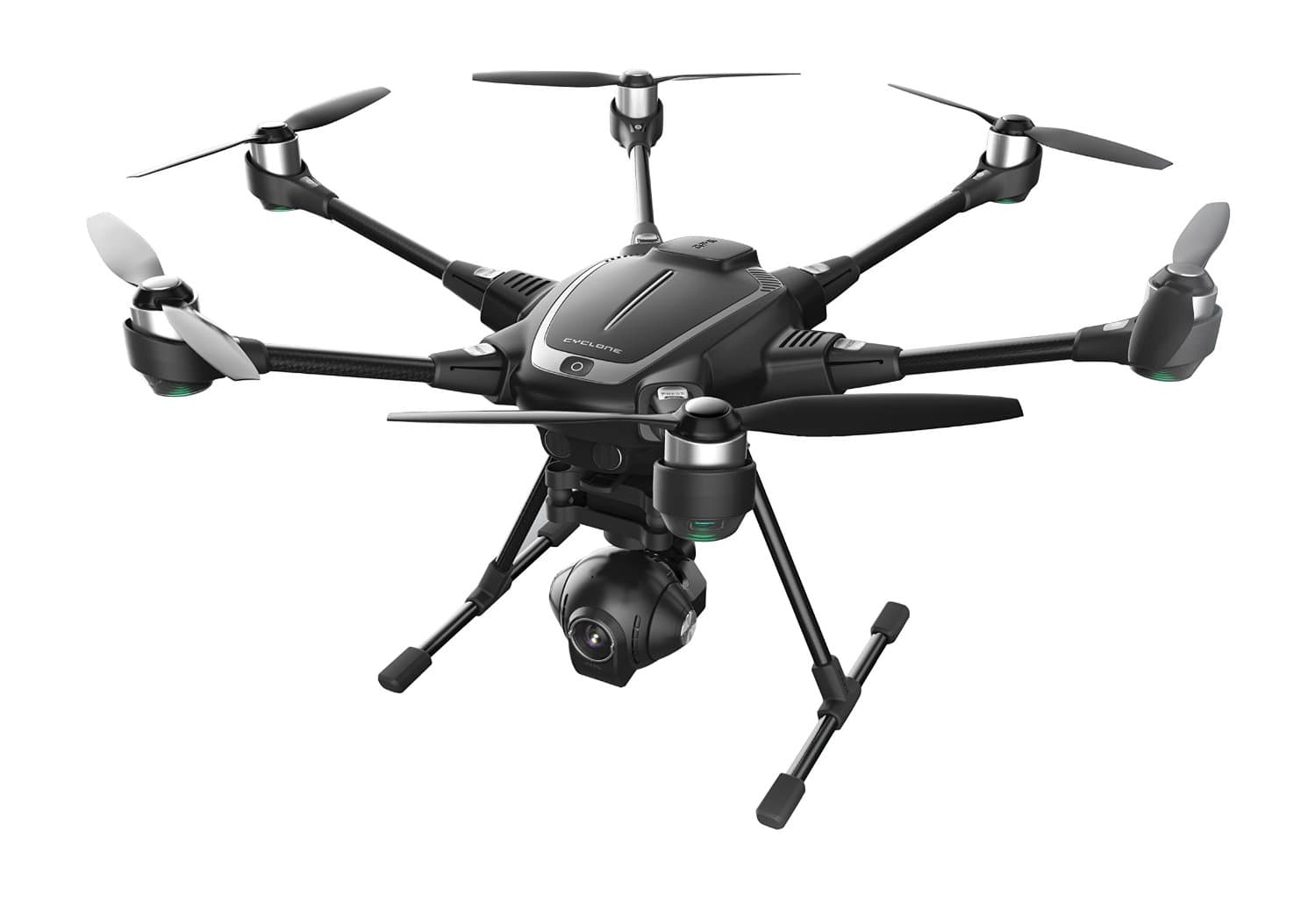
Even visually similar aircraft can differ significantly in purpose. Gimbal position, landing gear, mass distribution and equipment access affect flight preparation and output quality. The platform should therefore be evaluated with the equipment that will be installed for real operations.
04 / Selection
First determine the mass of the camera, sensor, gimbal, mounts and auxiliary electronics. The calculation must use the complete working configuration, not an individual device.
Operating time is evaluated under payload while accounting for route, altitude, wind and the energy reserve required to complete the mission safely.
The flight controller, positioning, control link and sensors must work as one system. Compatibility matters more than the number of individual features in a specification.
Before selecting a platform, evaluate transport, site preparation, maintenance, spare parts, operator training and applicable flight rules.
05 / Limitations
A hexacopter is not a universal replacement for other UAVs: additional capabilities come with greater complexity and operating requirements.
Six power units require more energy. Operating time depends on batteries, total mass, temperature, wind and flight mode.
Additional motors, controllers and frame elements increase both dimensions and the number of components to maintain. This affects logistics and operating cost.
A six-rotor layout alone does not guarantee fault tolerance. Suitable control algorithms, thrust reserve, maintenance procedures and a trained operator are required.
Next step
We will define the purpose, operating conditions and constraints to identify the right platform class without relying on unverified specifications.