01
Observation and patrol
An open view and steady cruise flight allow an autogyro to inspect areas and extended assets. The specific mission depends on flight conditions, equipment and crew requirements.
Light rotorcraft
Compact rotorcraft with an autorotating main rotor and a separate propulsion propeller for forward movement.
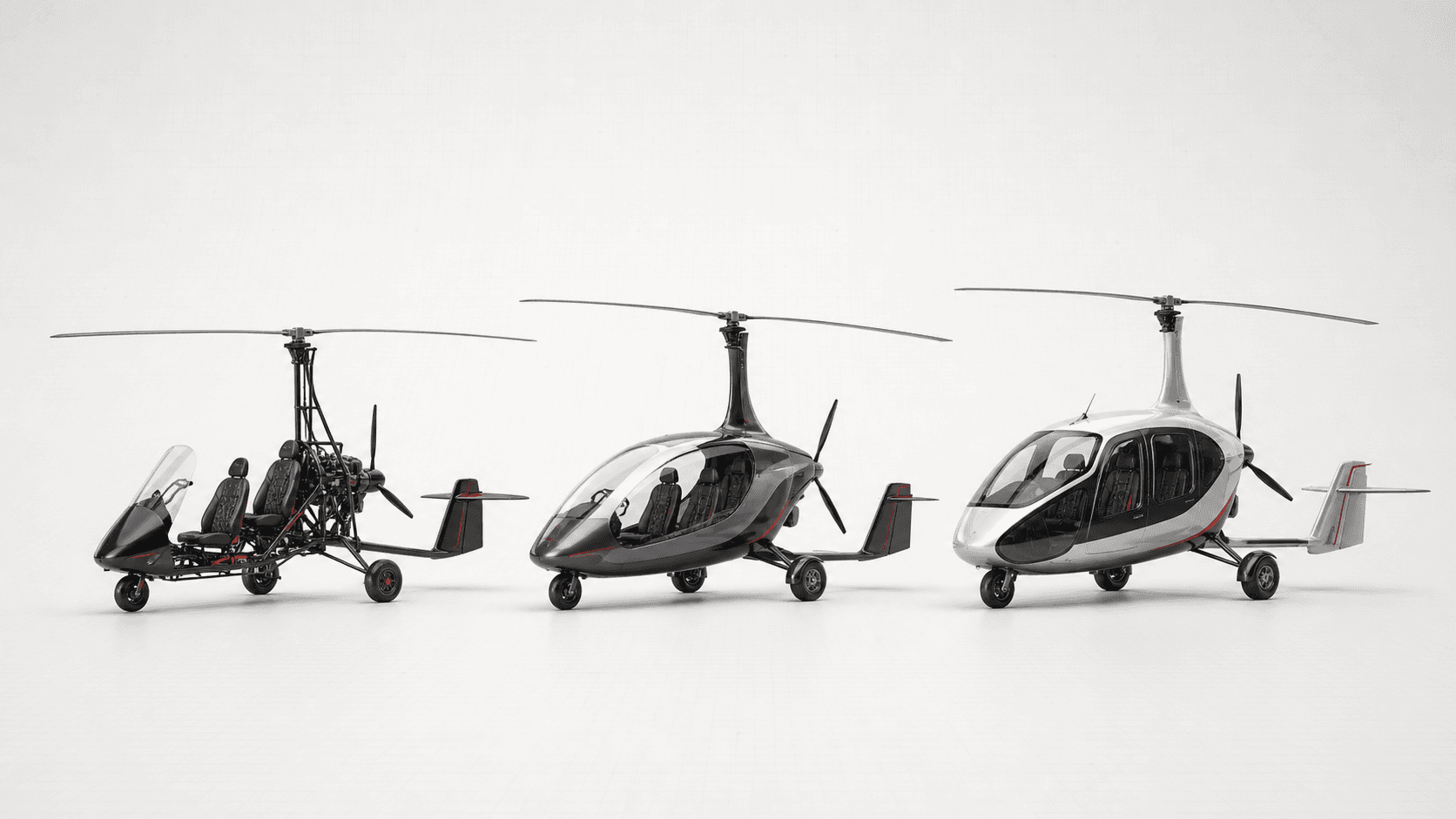
01 / Flight principle
An autogyro, also known as a gyroplane or gyrocopter, is a rotorcraft. Its main rotor is not continuously powered by the engine in flight: the blades rotate under the force of the oncoming airflow.
A separate pusher or tractor propeller provides forward movement, depending on the layout. Forward speed maintains airflow through the rotor disc and the autorotation that produces lift.
Unlike a helicopter, a typical autogyro is not designed to hover and takes off with a ground roll. On many models the rotor is pre-rotated before takeoff, then continues to spin freely in the airflow after liftoff.
02 / Applications
The aircraft's role is determined by layout, equipment, basing conditions and crew training - there is no universal configuration for every mission.
An open view and steady cruise flight allow an autogyro to inspect areas and extended assets. The specific mission depends on flight conditions, equipment and crew requirements.
An autogyro can serve as a platform for aerial photo and video observation. Selection considers cockpit visibility, equipment placement, vibration, route and the permitted modes of the specific model.
Two-seat layouts are used for training and maintaining proficiency. The program, equipment and approvals depend on the training organization, aircraft type and applicable aviation requirements.
Autogyros are considered for personal and familiarization flights along planned routes. Mission range, sites, weather, crew arrangement and operating limitations are evaluated before selection.
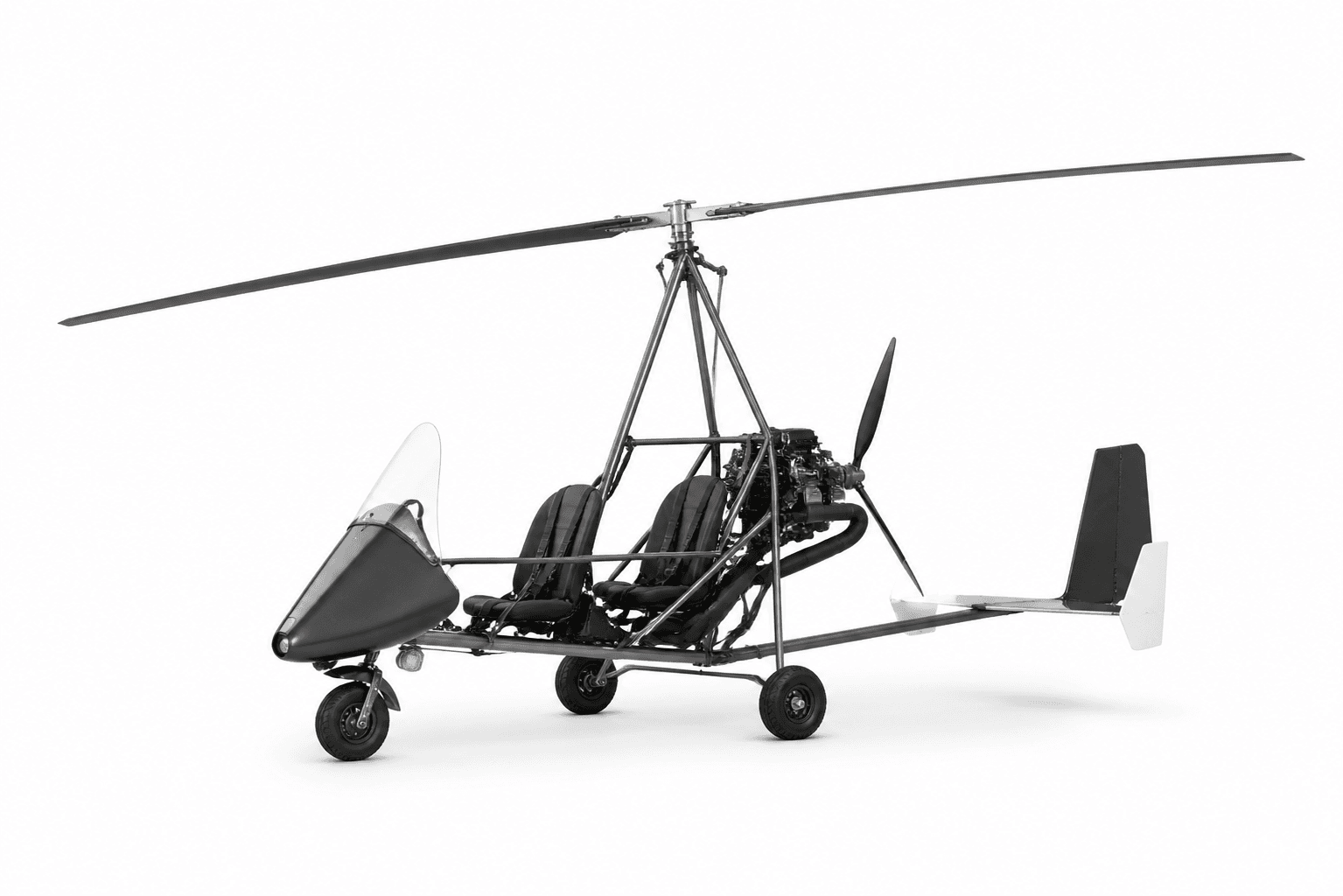
03 / Design
Autogyros are available with open or enclosed cockpits and tandem or side-by-side seating. The propulsion propeller can be in front of or behind the cockpit, so the same role can be achieved through different layouts.
The aircraft must be evaluated as a complete system: rotor, hub, pre-rotator, engine, propeller, tail, landing gear, controls and instruments must suit the intended operating conditions.
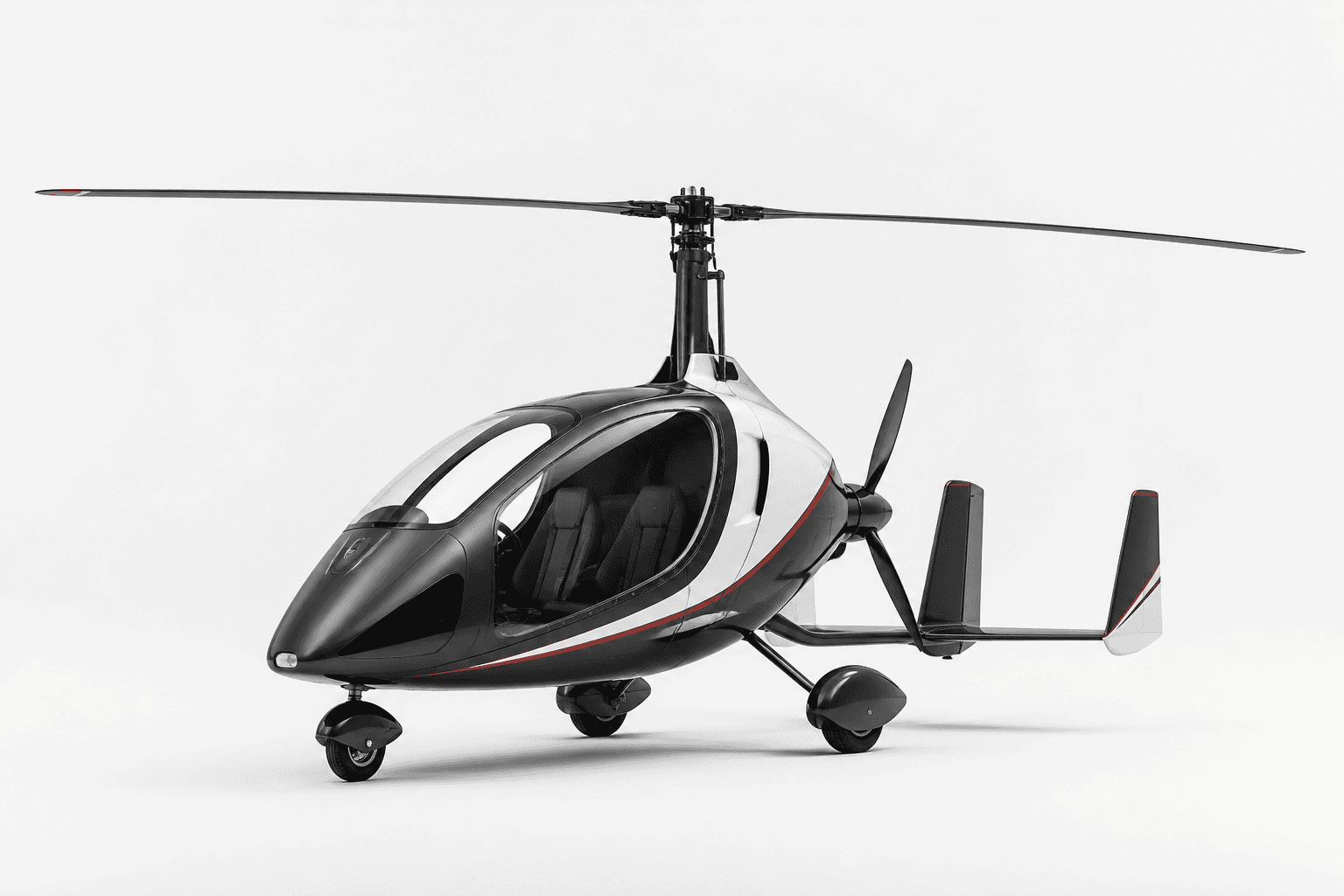
Enclosed cockpit
An enclosed layout protects the pilot and passenger from direct airflow and precipitation, but adds requirements for visibility, ventilation, access and mass control. These parameters are verified against the selected model's documentation.
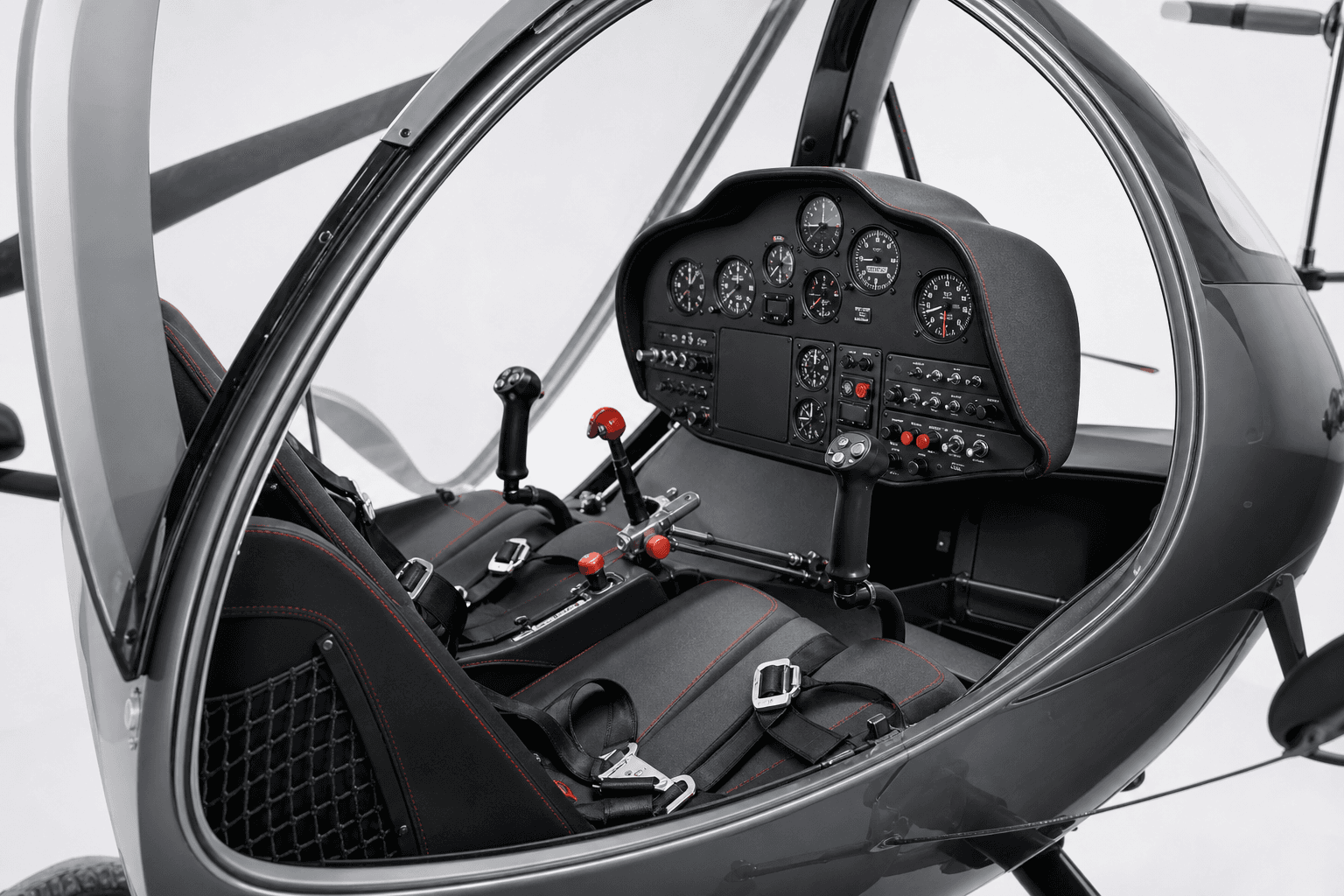
Pilot workstation
The cockpit monitors engine, rotor and flight parameters. Instrument layouts differ, so comparisons should consider ergonomics, readability, redundancy and the crew's mission.
04 / Selection
First define the purpose of the flights, expected routes, crew and equipment. These inputs separate mandatory requirements from desirable options.
An open or enclosed cockpit, tandem or side-by-side seating, and the position of the propulsion propeller affect visibility, comfort, access to controls and maintenance.
Evaluate the actual site, surface, obstacles, typical wind conditions, storage and maintenance capability rather than relying on advertised model figures.
Before purchase, confirm pilot training, maintenance procedures, component availability, documentation and applicable flight rules.
05 / Limitations
Autorotation is fundamental to autogyro flight, but it does not remove the limits of the specific model, pilot training or site requirements.
Permitted wind, precipitation, temperature and visibility are defined by the aircraft documentation. The rotor and an open cockpit require particularly careful assessment of conditions.
Most autogyros require a takeoff roll and are not designed to hover like a helicopter. The site is selected using the actual requirements of the specific model and crew.
Safe operation depends on pilot training and the condition of the rotor, engine, controls and airframe. A seemingly simple layout does not remove the need for scheduled inspections.
Next step
We will define the purpose, cockpit requirements, basing conditions and constraints to prepare a focused commercial proposal.