Piston
Fuel combustion moves the pistons, the crankshaft turns the propeller, and the propeller creates thrust. The primary design parameter is shaft power.
Two classes of aviation powerplants
Piston and jet engines for aviation projects with different requirements for power, thrust, layout and operating conditions. A specific powerplant is selected together with the aircraft and its systems.
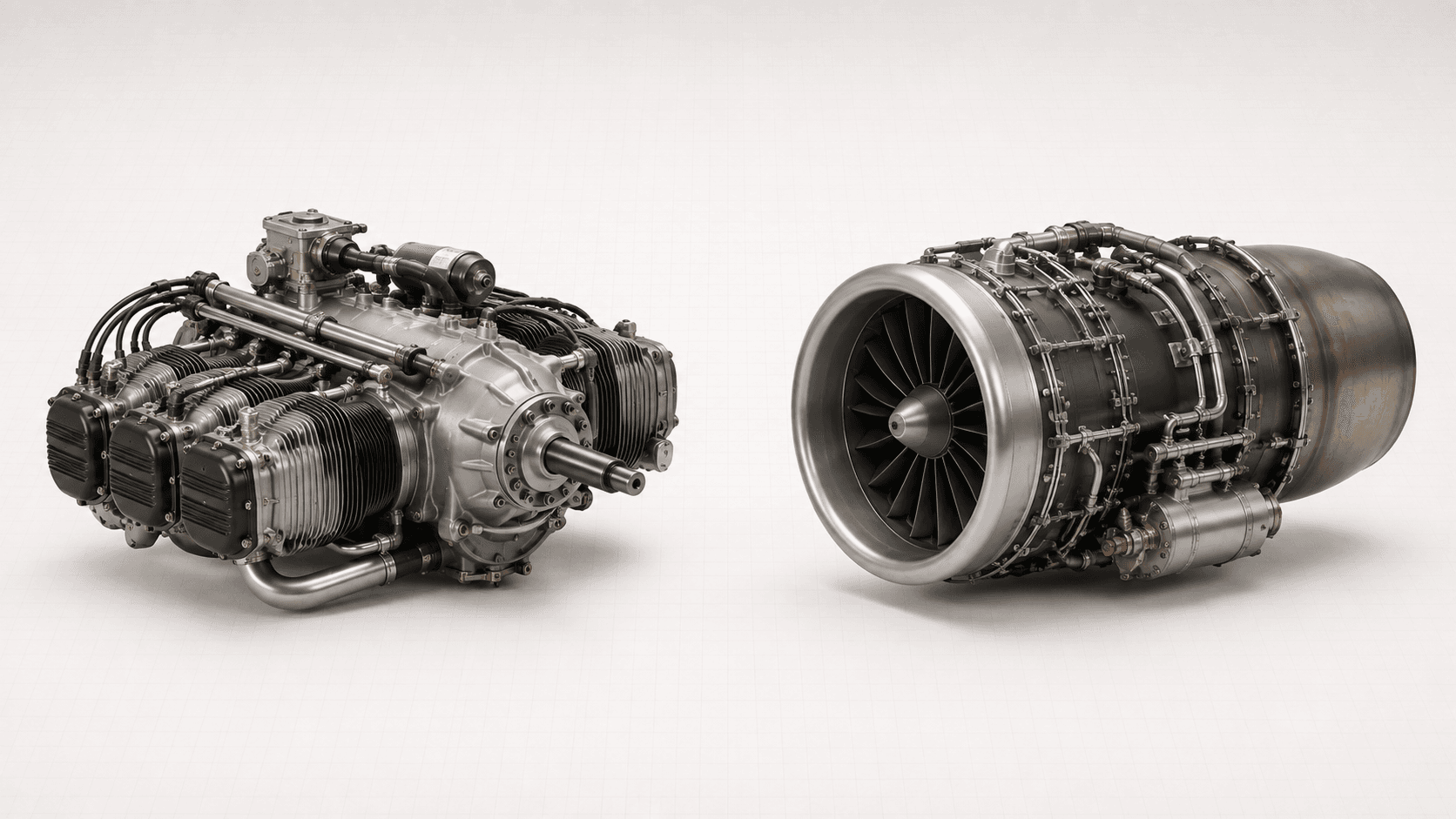
Fuel combustion moves the pistons, the crankshaft turns the propeller, and the propeller creates thrust. The primary design parameter is shaft power.
Air is compressed, mixed with fuel and expelled through the nozzle as an accelerated flow. The primary design parameter is engine thrust.
01 / Operating principle
In a piston engine, the fuel-air mixture burns in the cylinders and moves the pistons. The crankshaft drives a propeller that accelerates air rearward and creates thrust. The engine, any reduction gearbox and the propeller are therefore selected as one system.
In a jet engine, the compressor raises intake-air pressure, fuel is added in the combustion chamber, and hot gas drives the turbine and accelerates through the nozzle. The result is direct jet thrust without a propeller.
A piston system converts power into thrust through a propeller and is generally selected for moderate speeds and endurance. A jet creates thrust directly with gas flow and is used in faster projects. They should be compared by the aircraft mission, not only by engine size or mass.
02 / Applications
Engine type is selected by aircraft purpose, required speed, endurance, payload and basing conditions.
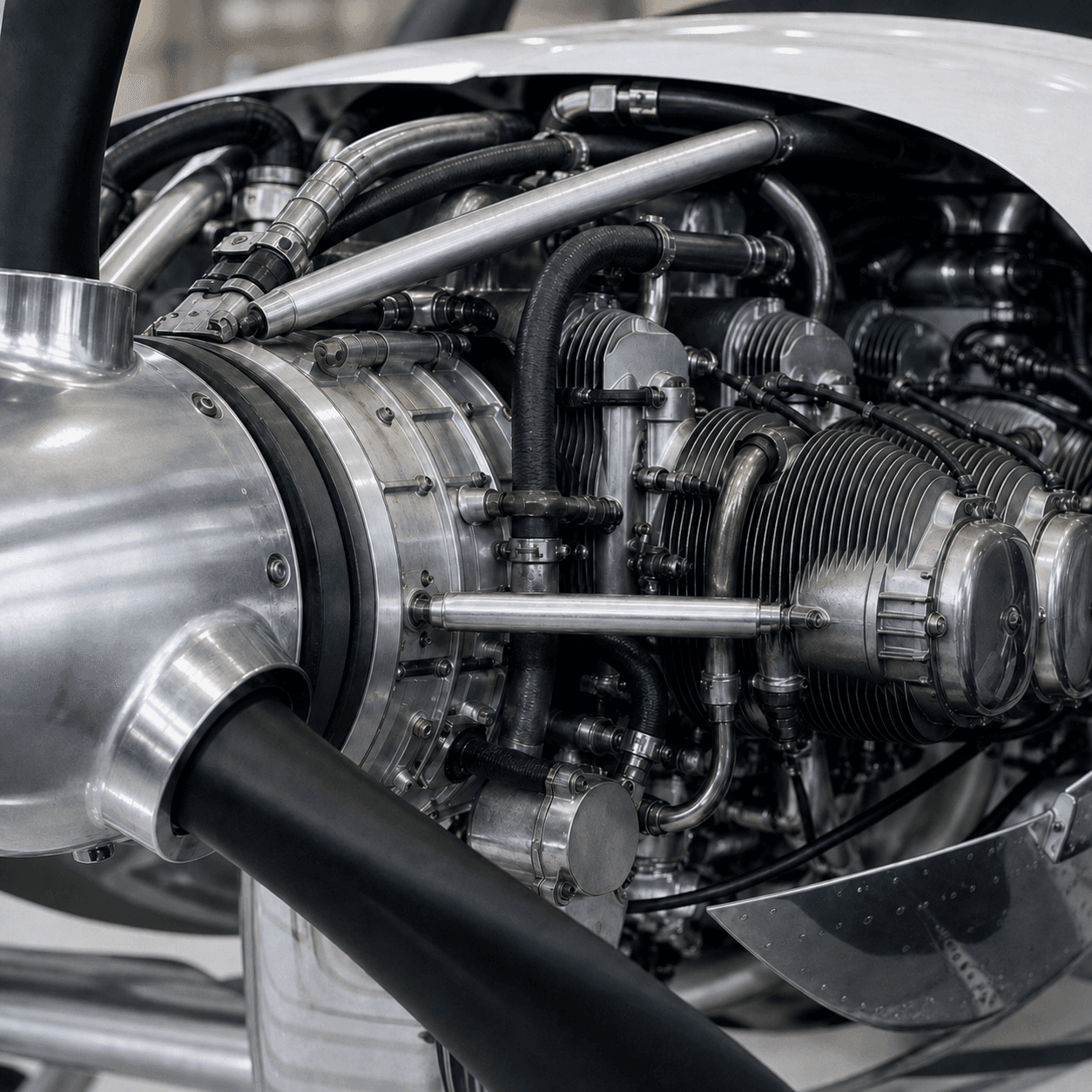
Piston engines with propellers are used where moderate speed, endurance and operation from general-aviation aerodromes are priorities. Power, propeller and cooling are matched to the mass and operating modes of the specific aircraft.
An unmanned platform may use a piston or jet configuration. The choice depends on required speed, endurance, payload and available space for fuel, cooling, intake and control systems.
A jet powerplant is considered when a project requires high speed and direct thrust without a propeller. Intake flow, exhaust, thermal protection, fuel system and the engine's effect on balance are calculated in advance.
Both engine types are tested on prepared rigs to verify starting, steady and transient modes, fuel consumption, temperature and control operation. Measurement scope and safety zone are defined by the test program.
03 / System
A piston engine requires a compatible propeller, cooling system and exhaust. A jet requires a designed intake, nozzle and thermal protection. Both need fuel systems, controls, sensors, electrical power and reliable mounts.
The choice affects airframe shape, balance, fuel capacity, takeoff performance, speed and maintenance. The flight profile is therefore defined first, then the powerplant type, and only then are specific options compared.
Additional examples
The images show the difference between a compact piston installation, a more complex turbocharged system and a jet engine for a high-speed aircraft.
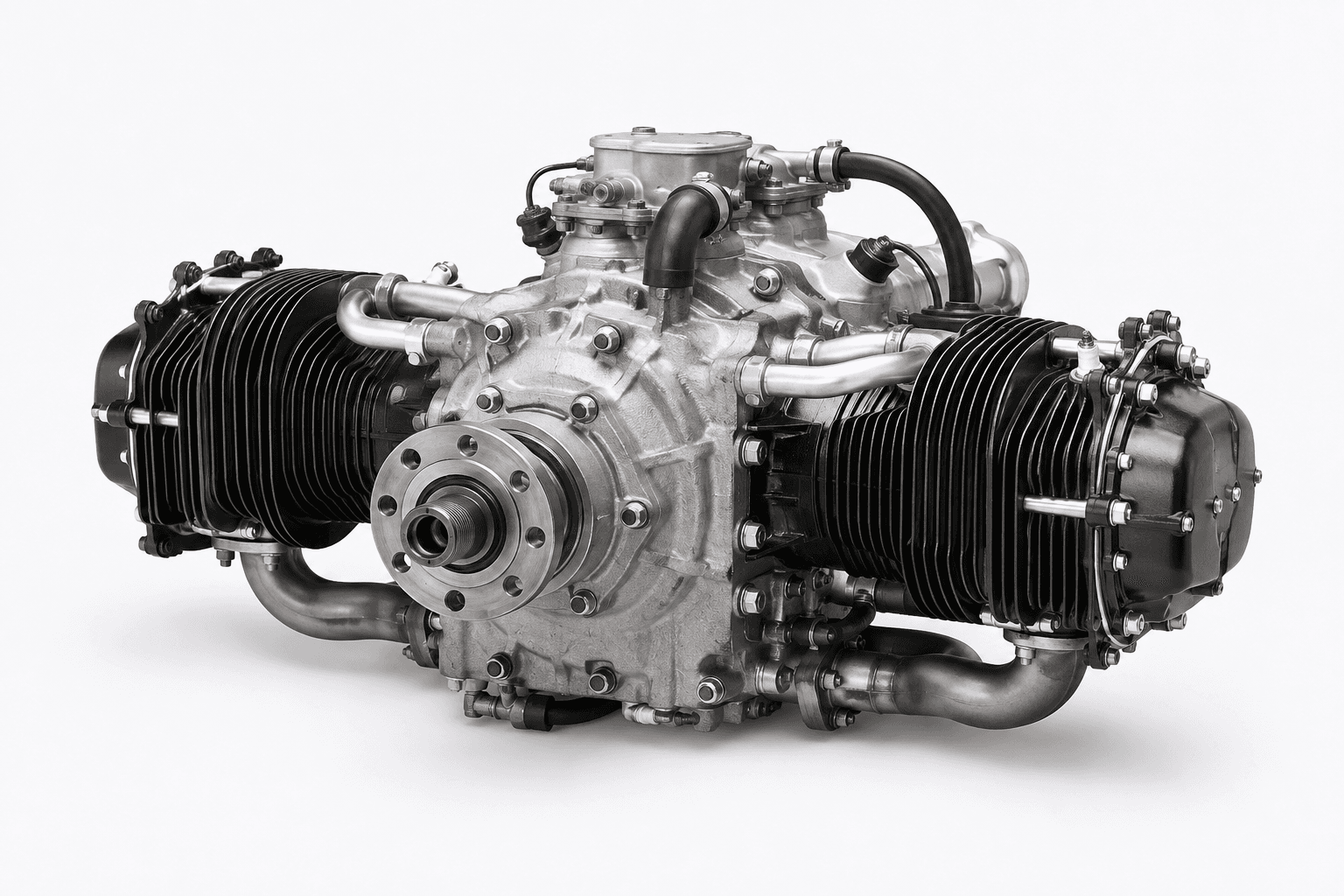
A low-profile layout with horizontally opposed cylinders suits light aircraft where compact size, straightforward air cooling and direct propeller drive are important.
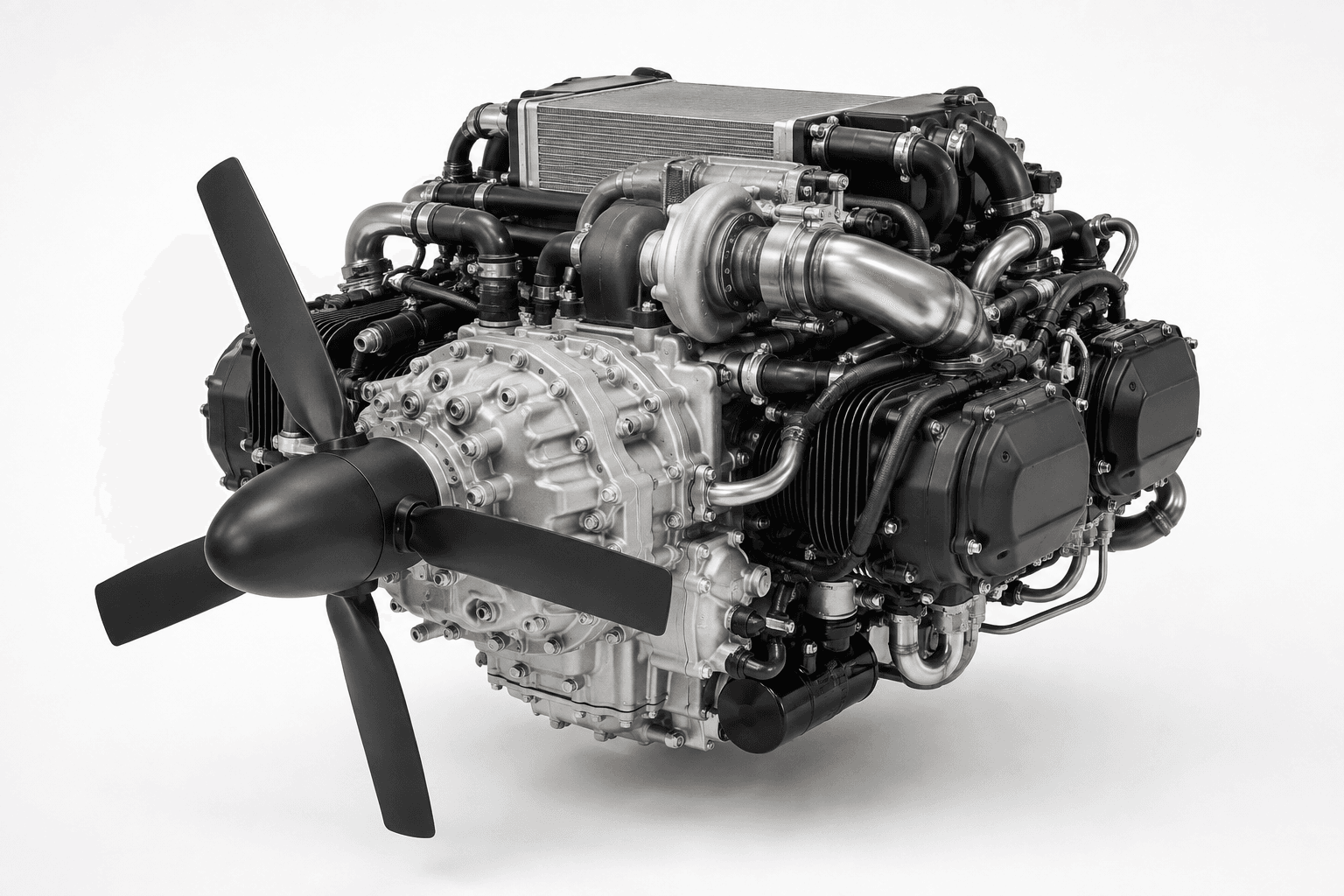
Turbocharging helps maintain required power across a wider altitude range, while a reduction gearbox matches engine and propeller speeds. Such a system requires carefully designed cooling and control.
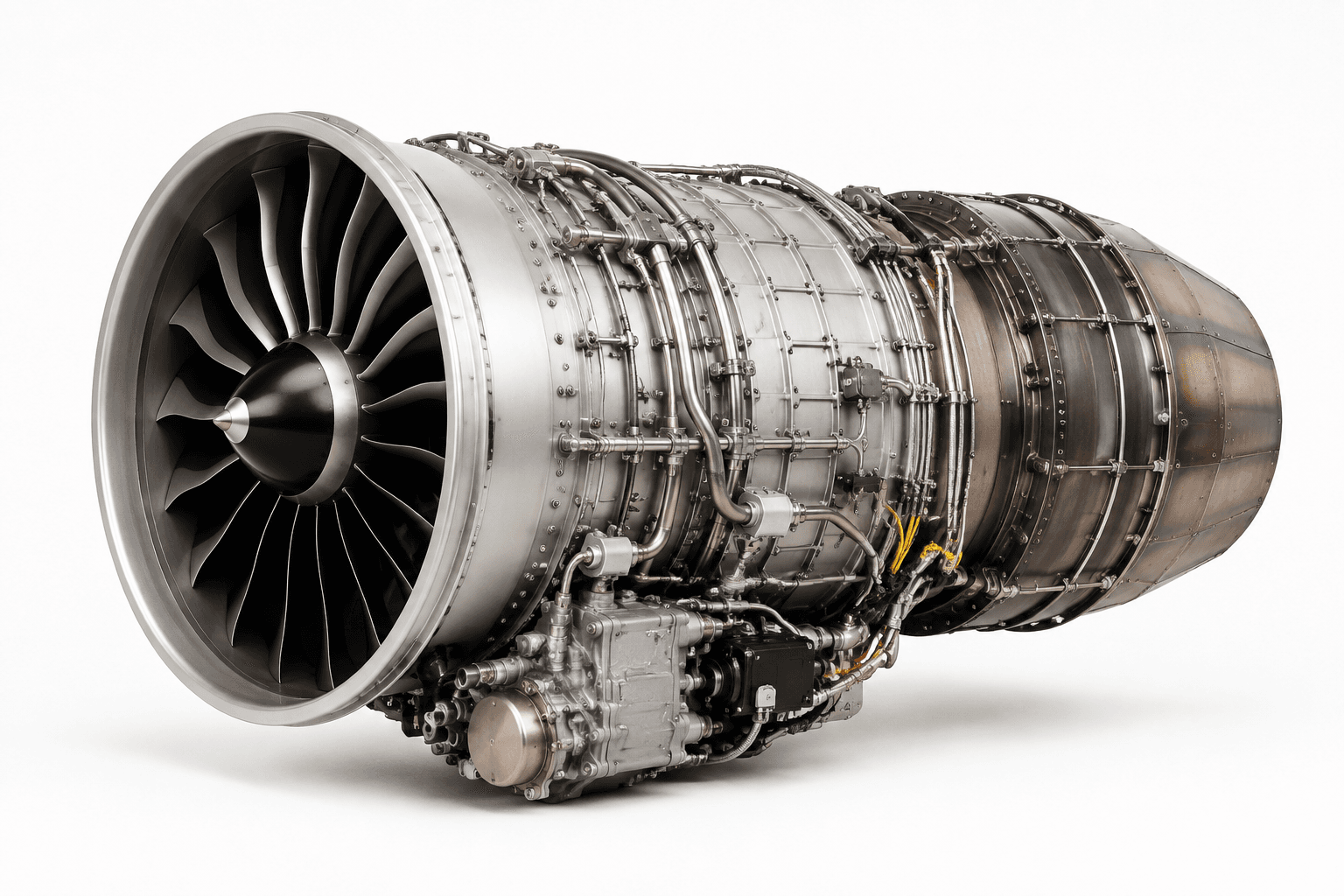
Air passes through the fan and compressor; after combustion, the flow drives the turbine and produces thrust. The layout is designed for integration with the aircraft intake and nozzle.
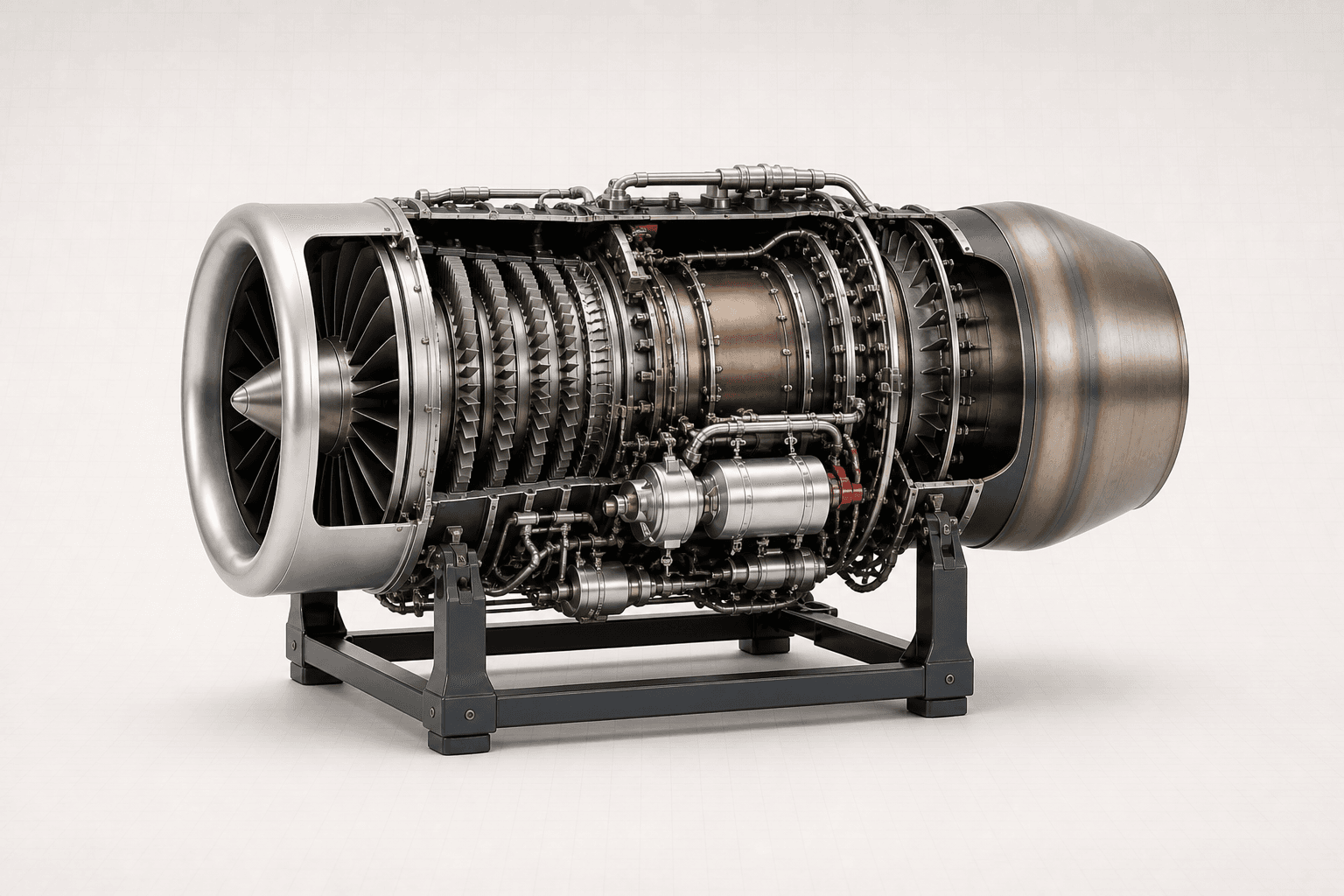
Jet configuration
The compressor raises air pressure, the combustion chamber adds energy, the turbine keeps the compressor turning and the nozzle produces thrust. Intake-flow quality, heat removal and safe jet direction are important for integration.
Common integration
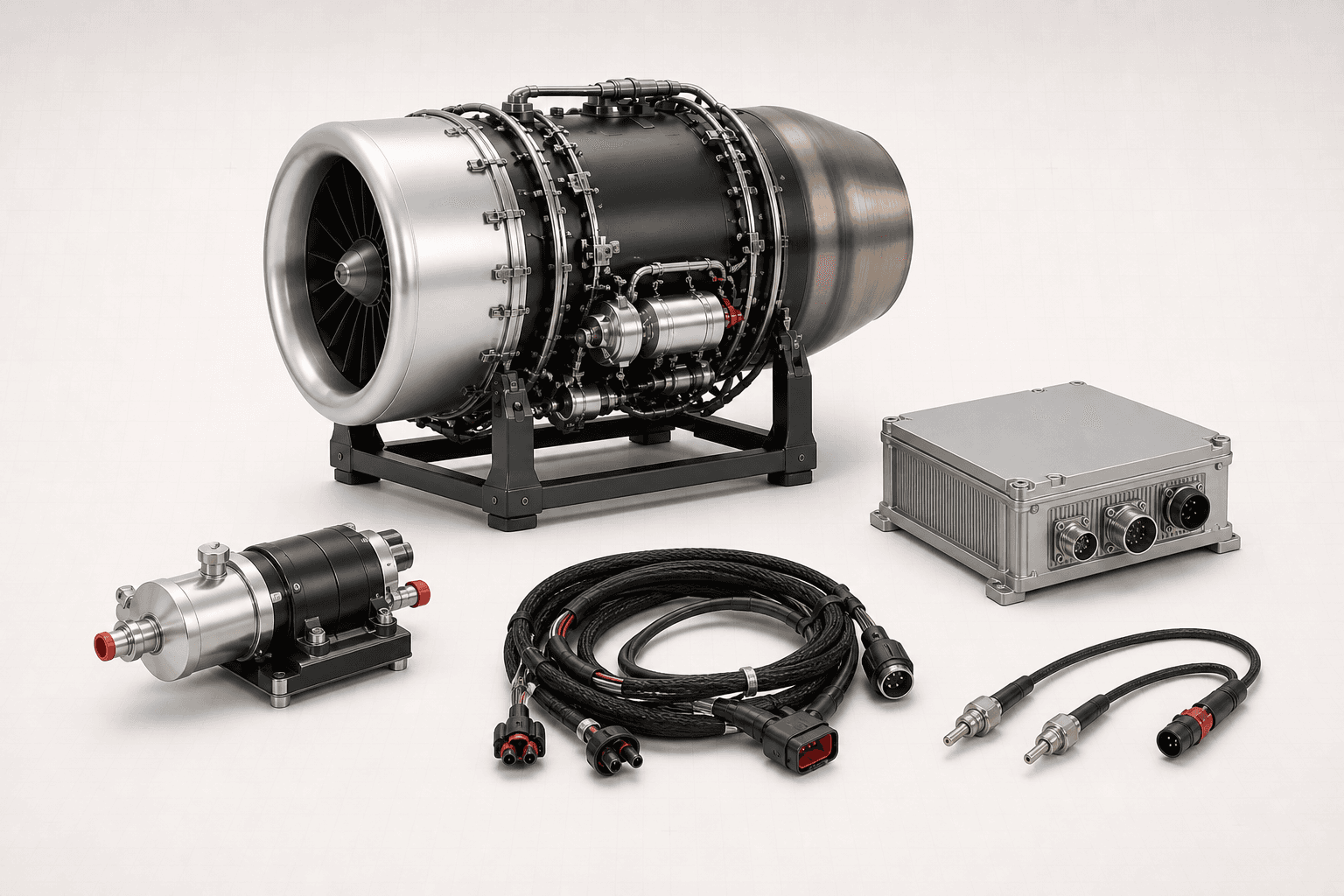
System composition differs, but the principle is the same: every component must be compatible with the engine and aircraft. Placement affects cooling, diagnostics, line lengths, maintenance and safe shutdown.
04 / Selection
For a propeller system, define required shaft power and RPM range; for a jet, define thrust and speed regime. Then account for altitude, temperature, flight duration and load variation.
A piston powerplant suits one range of speeds and endurance, while a jet suits another. Selection uses the complete flight profile: takeoff, climb, cruise, maneuvering and landing.
For a piston engine, match the propeller, cooling and exhaust. For a jet, match the intake, nozzle and thermal protection. In both cases verify mounts, fuel and electrical systems, controls, mass and balance.
Compare fuel consumption and availability, starting requirements, noise, maintenance, diagnostics, life limits and personnel training. The final choice is confirmed by aircraft calculations and documentation for the specific powerplant.
05 / Limitations
Engine characteristics are evaluated only together with the propeller or jet flow path, aircraft systems, flight profile and operating requirements.
A piston engine is compared primarily by power, RPM and propeller compatibility. A jet is compared by thrust and how it changes across modes. These figures cannot be substituted directly for one another.
A piston installation needs properly designed cooling and exhaust. A jet needs stable intake flow, thermal protection and a safe zone behind the nozzle. The layout is checked across the complete operating range.
For both types, consider inspection intervals, diagnostics, consumables and starting and storage restrictions. All modes, life limits and requirements are verified against the specific engine documentation.
Next step
We will define the purpose, aircraft, operating conditions, control requirements and package scope to prepare a focused commercial proposal.