Equipment catalog

Light and multipurpose aviation

Helicopters

Rotorcraft for routes, observation and special missions where vertical takeoff, careful site selection and flexible cabin configuration are important.

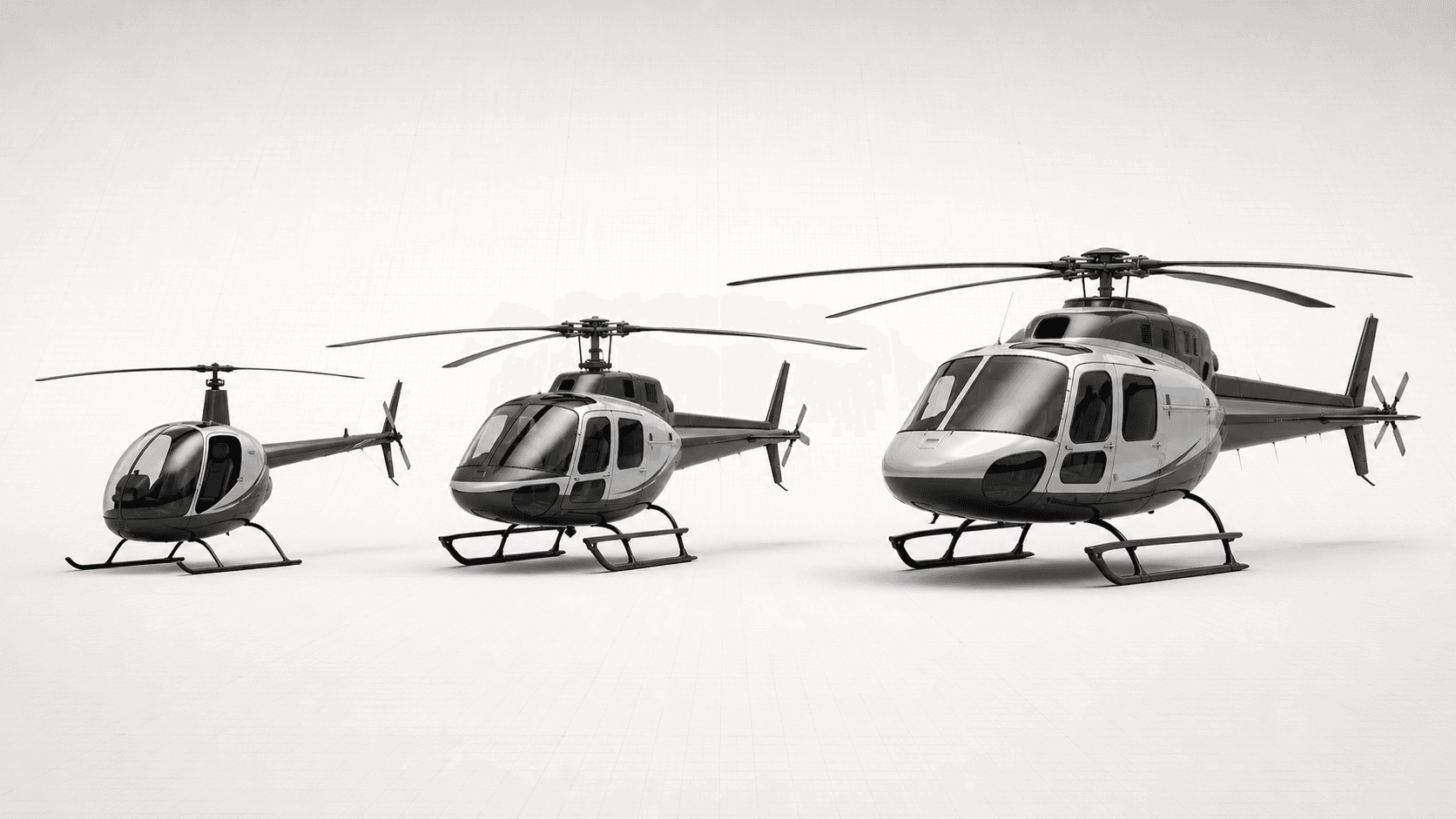
Three civil helicopters of different sizes on a light background

01 / Flight principle

The main rotor creates lift and controls movement

The engine powers the main rotor, which creates thrust. By changing collective and cyclic blade pitch, the pilot controls altitude, attitude and forward movement.

Main-rotor torque is countered by a tail rotor or another design. The page shows a common single-main-rotor layout with a tail rotor, but individual aircraft may differ significantly in rotor system, engine, landing gear and cabin arrangement.

Vertical takeoff expands the choice of sites but does not make them arbitrary. Obstacles, site condition, mass, balance, weather, power reserve and operating-manual limits are checked for every flight.
02 / Applications

Where helicopters are used

The mission is determined by cabin, payload, powerplant, equipment, route and available landing-site conditions.

01

Personal and business routes

A helicopter is considered for routes between prepared sites where vertical takeoff and landing are especially important. Selection considers actual passenger count, baggage, distance, weather and available infrastructure.

02

Observation and aerial imaging

Wide glazing and low forward speed are useful for inspection and imaging. Equipment placement, visibility, vibration and the approved payload are checked in advance.

03

Medical and rescue missions

Specialized versions can support evacuation and specialist transport. This mission requires a suitable cabin, certified equipment, trained crew and prearranged ground support.

04

Site delivery and support

Helicopters are used where conventional ground logistics are difficult. The ability to carry people, baggage or external loads is determined by the specific aircraft documentation and mission conditions.

Why consider a helicopter
Vertical landingPrecise maneuveringFlexible cabinVaried sites
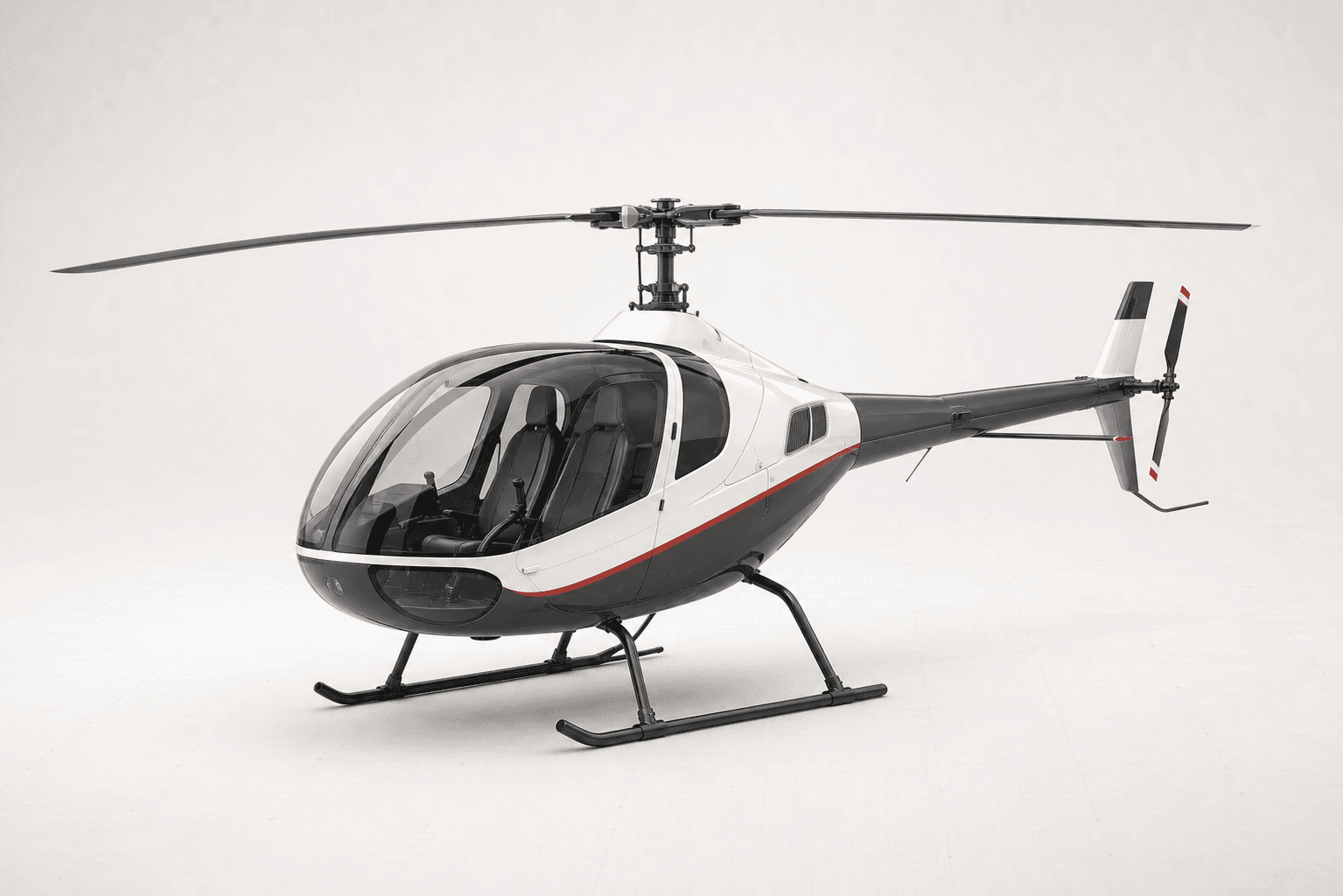
Compact two-seat helicopter on a light background

03 / Layout

Configuration for the mission and site

Compact two-seat helicopters can be used for training and personal flights, while aircraft with larger cabins can carry passengers and equipment or perform specialized missions.

Comparison should cover more than size or engine type. The rotor system, transmission, anti-torque system, landing gear, fuel system, avionics and maintenance arrangements form one operating complex.

  • Seats and cabin access for the actual mission
  • Powerplant and rotor system for the flight profile
  • Skids or wheeled landing gear for selected sites and storage
  • Instruments, communications and navigation for crew training and routes

Multipurpose layout

Cabin volume connects people, baggage and equipment

Seat count alone does not determine usable load. For every flight, passengers, fuel, baggage, special equipment, balance and calculated conditions at departure and destination sites are assessed together.

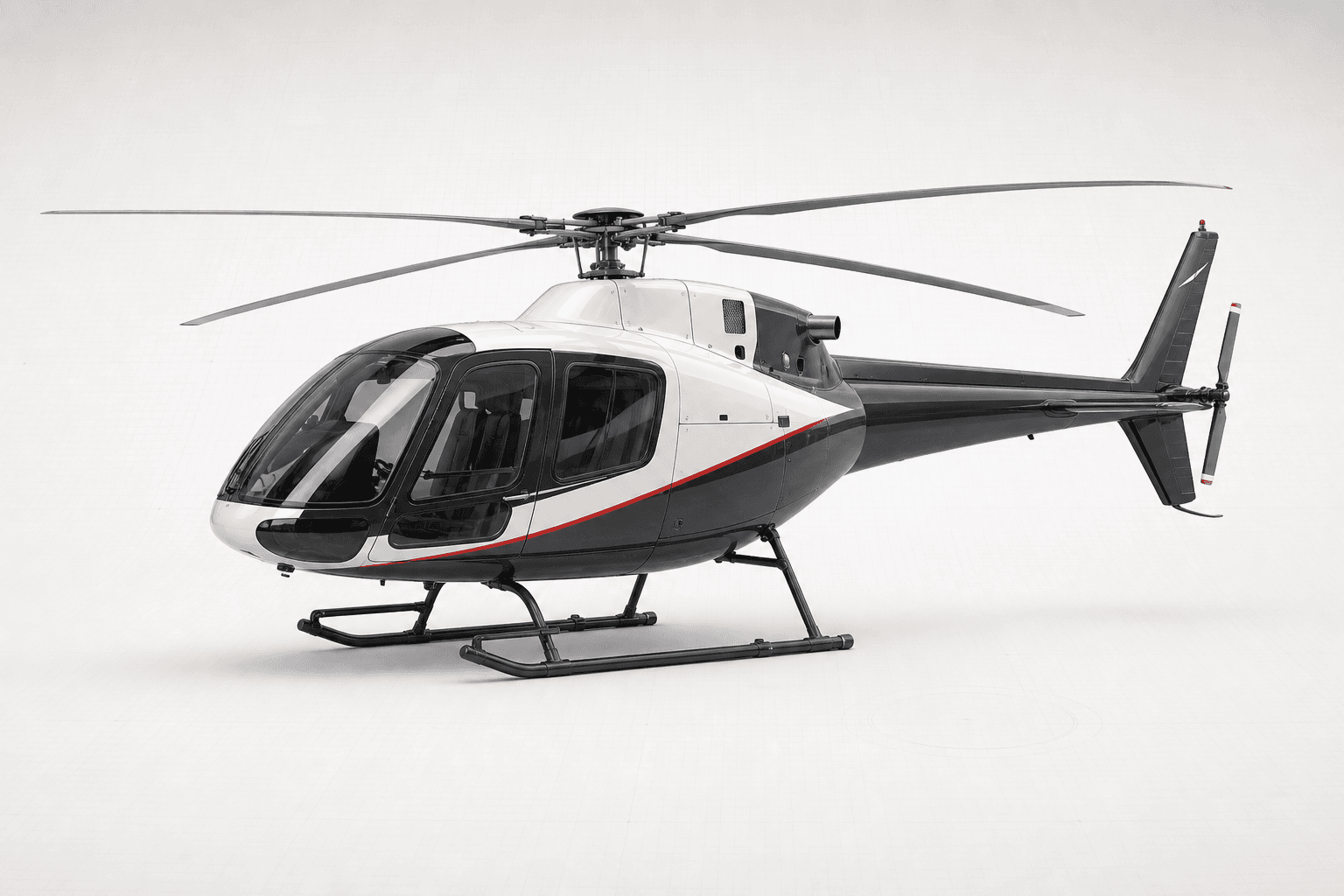
Modern light multipurpose helicopter on a light background

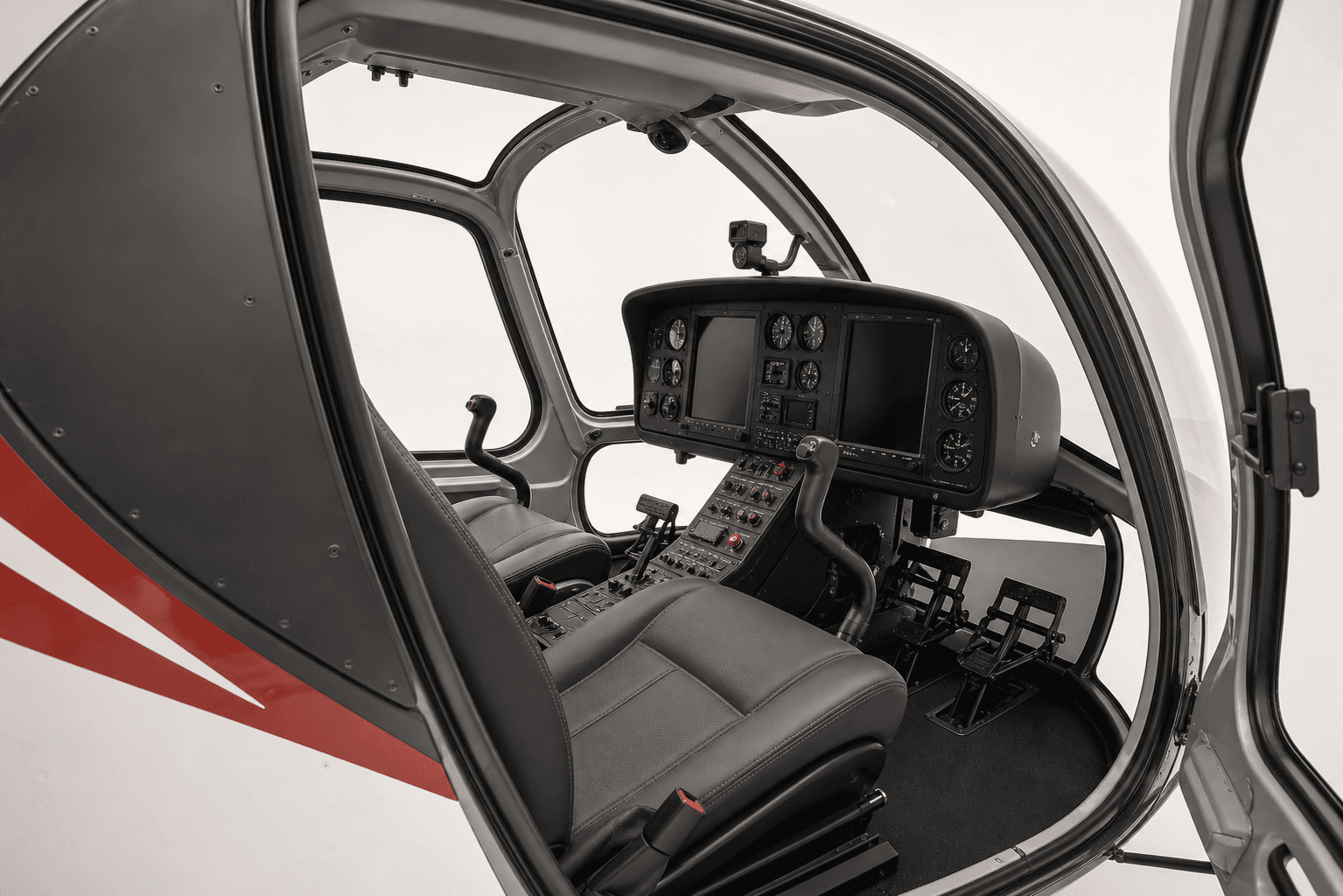
Pilot workstation

The controls operate as one system

Cyclic and collective controls, pedals, engine instruments, navigation and communications must be clear to the crew and fit the mission. Cockpit comparisons consider visibility, ergonomics, equipment and pilot training requirements.

Light-helicopter cockpit with instruments and controls

04 / Selection

How to determine the right helicopter class

01

Define the mission

Define flight purpose, number of people, baggage or equipment, seasonality, distances and expected frequency of use. These inputs set requirements for the cabin, powerplant and configuration.

02

Check the sites

Evaluate site size and surface, obstacles, elevation, wind, storage, refueling and technical support. Vertical landing does not remove the need for a safe zone.

03

Calculate the flight profile

The route is assessed together with payload, temperature, elevation, wind, fuel reserve and possible alternate sites. Nominal figures without these conditions do not describe the real mission.

04

Plan operations

Before selection, verify pilot training, documentation, maintenance intervals, component availability, storage, insurance and support requirements for the specific aircraft.

05 / Limitations

What to check before choosing

A helicopter requires trained crew, a suitable site, technical support and strict compliance with the documentation of the specific aircraft.

Weather and site

Wind, visibility, cloud, temperature, obstacles and landing-zone condition affect whether a flight can be performed. Permitted conditions are defined by the selected model's manual and crew training.

Mass and power reserve

Passengers, fuel, baggage and equipment are considered together. Before flight, mass, balance and calculated hover capability are checked for the actual altitude and temperature.

Crew and maintenance

Safe operation depends on pilot qualifications, the condition of the rotor system, engine, transmission and controls, and timely scheduled maintenance.

Next step

Describe the mission and site conditions

We will define the purpose, routes, load, basing conditions and constraints to prepare a focused commercial proposal.

Back to catalog

Request a commercial proposal

Complete the fields so we can contact you.

How should we contact you?

The information provided is used only to respond to your request and prepare a commercial proposal.

Helicopters - ALTWINGS